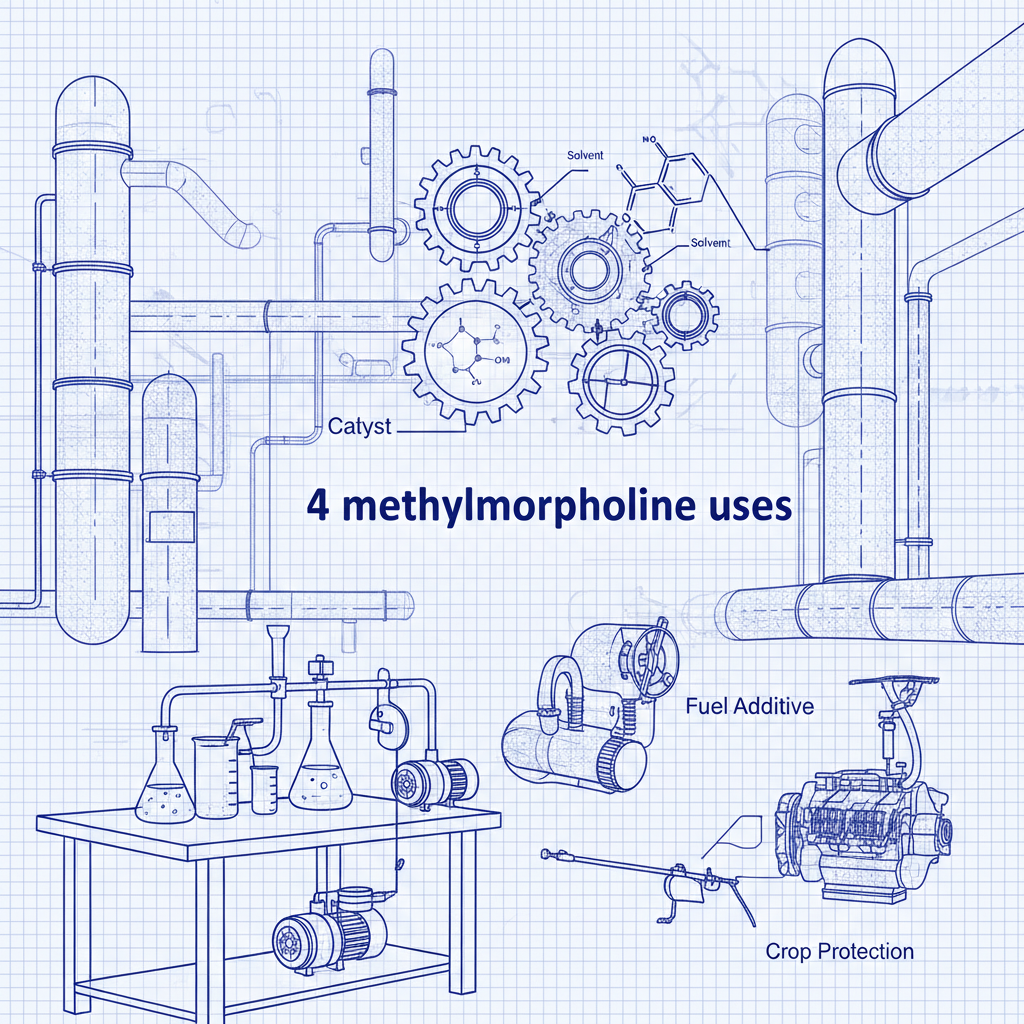
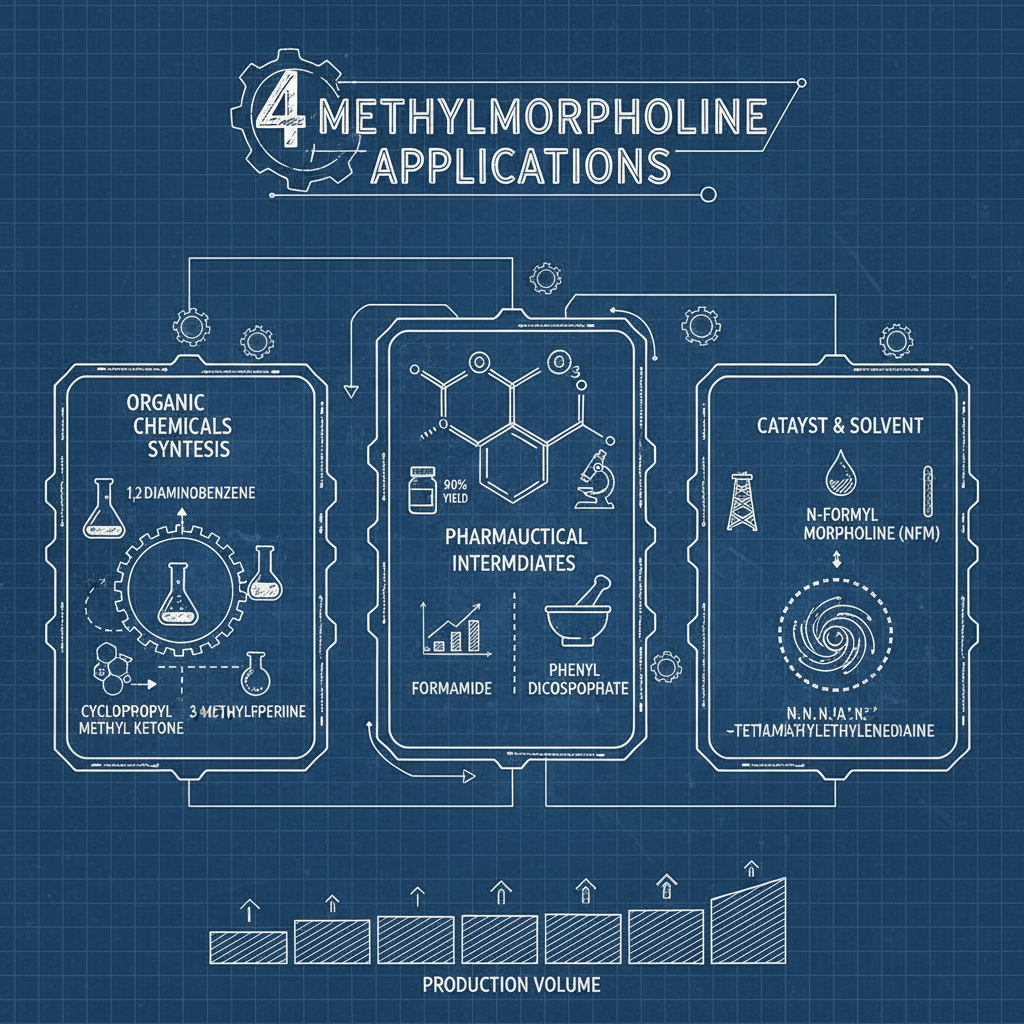
4-Methylmorpholine (NMM) is a versatile tertiary amine that has become an indispensable building block in the modern chemical landscape. Understanding the diverse 4 methylmorpholine uses is essential for professionals in pharmaceuticals, polymer science, and industrial synthesis, as this compound serves as a critical catalyst and solvent that optimizes reaction kinetics and product purity.
On a global scale, the demand for high-efficiency organic bases has driven the adoption of NMM across multiple sectors. From its role in the synthesis of complex active pharmaceutical ingredients (APIs) to its application in specialized coating resins, the strategic implementation of 4 methylmorpholine uses allows manufacturers to reduce waste and increase the scalability of their chemical processes.
By bridging the gap between raw chemical feedstock and high-value end products, the technical utility of this molecule addresses critical challenges in industrial efficiency. This comprehensive guide explores the multifaceted 4 methylmorpholine uses, providing a deep dive into its chemical properties, practical applications, and the future innovations shaping its role in green chemistry.
Global Relevance of 4 Methylmorpholine Uses
The global chemical industry relies heavily on specialty amines to facilitate complex reactions. In the context of 4 methylmorpholine uses, the compound is widely recognized for its ability to act as a base and a catalyst in the production of polyurethane foams and various pharmaceutical intermediates. According to industry standards and ISO guidelines for organic chemicals, the purity and stability of NMM are paramount for maintaining consistency in large-scale manufacturing.
A significant challenge in modern synthesis is the reduction of side reactions and the optimization of yield. By leveraging specific 4 methylmorpholine uses, chemists can precisely control the pH and alkalinity of a reaction environment, ensuring that sensitive molecular bonds are formed without degrading the surrounding structure. This makes it a cornerstone of high-precision chemical engineering worldwide.
Definition and Industrial Meaning of NMM
In simple terms, 4-Methylmorpholine is a heterocyclic tertiary amine characterized by a six-membered ring containing both nitrogen and oxygen. When discussing 4 methylmorpholine uses, we are essentially referring to its capability to donate a pair of electrons from the nitrogen atom, making it an effective nucleophile and an organic base.
Its connection to modern industry is deeply rooted in the need for solvents that are both polar and aprotic. This unique chemical structure allows it to dissolve a wide variety of organic compounds while remaining stable under various thermal conditions, which is a critical requirement for the production of specialty resins and advanced polymers.
Beyond mere technicality, the industrial meaning of NMM extends to humanitarian needs, particularly in the pharmaceutical sector. Many life-saving drugs require the precise catalytic environment provided by NMM during their synthesis, meaning that the efficiency of 4 methylmorpholine uses directly impacts the availability and cost of essential medicines.
Core Components of NMM Performance
One of the primary aspects of 4 methylmorpholine uses is its exceptional solubility. The presence of the oxygen atom in the ring enhances its polarity, allowing it to bridge the gap between hydrophilic and hydrophobic reagents, which is vital for multi-phase reaction systems.
Scalability is another core component. Because NMM is relatively stable and can be easily recovered through distillation, its integration into industrial workflows is highly cost-effective. The versatility of 4 methylmorpholine uses ensures that it can be scaled from laboratory gram-scale synthesis to metric-ton industrial production without significant loss of efficacy.
Furthermore, the chemical selectivity of NMM distinguishes it from simpler amines. In specific acylation or alkylation reactions, 4 methylmorpholine uses provide a controlled basicity that prevents over-reaction, thereby increasing the purity of the final product and reducing the need for extensive downstream purification.
Key Factors in Catalytic Efficiency
The efficiency of NMM as a catalyst depends on several key factors, including its steric hindrance and electronic properties. In the realm of 4 methylmorpholine uses, the methyl group on the nitrogen atom provides a specific spatial configuration that optimizes the interaction between the catalyst and the substrate.
This efficiency is often measured by the reduction in activation energy required for a reaction. When comparing different organic bases, NMM frequently outperforms linear amines in terms of reaction speed and selectivity, particularly in the synthesis of polyurethane and epoxy resins.
Comparison of 4 Methylmorpholine Uses Efficiency
Global Applications and Real-World Use Cases
In the pharmaceutical industry, 4 methylmorpholine uses are most prominent during the synthesis of complex heterocyclic compounds. For instance, in the production of certain antiviral and antibiotic agents, NMM acts as a critical acid scavenger, neutralizing by-products like HCl to prevent the degradation of the active molecule.
Beyond medicine, NMM is heavily utilized in the automotive and construction sectors through its role in polyurethane production. In remote industrial zones where high-performance coatings are required to withstand extreme weather, the use of NMM ensures that the resulting polymers have the necessary durability and elasticity, proving the practical value of these specialized chemical applications.
Long-Term Value and Sustainability Benefits
The long-term value of adopting 4 methylmorpholine uses lies in its contribution to process intensification. By increasing reaction yields and reducing the amount of catalyst needed, companies can lower their overall operational costs while decreasing the volume of chemical waste generated.
From a sustainability perspective, NMM's ability to be recycled via vacuum distillation aligns with the principles of green chemistry. This circular approach reduces the reliance on virgin raw materials and minimizes the environmental footprint of organic synthesis, providing both economic and ecological advantages.
Moreover, the reliability of NMM creates a foundation of trust in the supply chain. When manufacturers can guarantee the purity of their intermediates thanks to stable 4 methylmorpholine uses, the entire production cycle becomes more predictable, ensuring the delivery of high-quality products to the end consumer.
Future Trends in Organic Synthesis
Looking ahead, the evolution of 4 methylmorpholine uses is increasingly linked to the digital transformation of chemistry. AI-driven reaction optimization is now being used to determine the precise concentration of NMM required for specific substrates, eliminating trial-and-error and drastically speeding up the R&D phase.
Another emerging trend is the integration of NMM into flow chemistry. Unlike traditional batch processing, continuous flow systems allow for the precise control of temperature and pressure, which, when combined with the catalytic properties of NMM, can result in nearly instantaneous reactions with virtually zero waste.
As global policies shift toward carbon neutrality, the focus is moving toward bio-based precursors for morpholine derivatives. The future of 4 methylmorpholine uses will likely involve "greener" synthesis routes that maintain the compound's high efficiency while adhering to stricter environmental regulations.
Comparative Analysis of 4 Methylmorpholine Applications Across Industries
| Industry Sector |
Primary Function |
Efficiency Gain |
Sustainability Impact |
| Pharmaceuticals |
Acid Scavenging |
High (9/10) |
Reduced By-products |
| Polyurethanes |
Blowing Catalyst |
Very High (10/10) |
Faster Cure Times |
| Specialty Resins |
Solvent/Base |
Medium (7/10) |
High Recoverability |
| Agrochemicals |
Intermediate Synth |
High (8/10) |
Improved Selectivity |
| Coatings |
PH Regulator |
Medium (6/10) |
Lower VOCs |
| Fine Chemicals |
Nucleophilic Agent |
High (8/10) |
Waste Reduction |
FAQS
In medicine, NMM is primarily used as a catalyst or a base during the synthesis of active pharmaceutical ingredients. Its most critical role is acting as an acid scavenger to neutralize hazardous by-products during the creation of complex molecular rings, ensuring that the resulting drug is pure and free of contaminants.
Yes, it is safe when handled according to standard chemical safety protocols (SDS). Because of its volatility, it should be used in well-ventilated areas with appropriate PPE. Its stability makes it a preferred choice over more volatile or corrosive bases in large-scale industrial environments.
NMM offers a unique balance of polarity and basicity due to the oxygen atom in its ring structure. This often makes it more soluble in diverse solvent systems and more selective in catalytic reactions compared to linear tertiary amines, leading to higher yields and fewer side reactions.
Absolutely. One of the key economic advantages of 4 methylmorpholine uses is that the compound can be recovered via vacuum distillation after the reaction is complete. This allows manufacturers to reuse the catalyst, reducing costs and environmental impact.
In polyurethane production, NMM acts as a blowing catalyst. It helps regulate the reaction between isocyanates and polyols, ensuring that the foam expands uniformly and achieves the desired density and structural integrity, which is essential for insulation and automotive seating.
High-purity 4-Methylmorpholine should be sourced from reputable chemical manufacturers who provide detailed certificates of analysis (CoA). For industrial and laboratory needs, visiting specialized providers like www.sincerechemicals.com ensures you receive a product that meets strict ISO and purity standards.
Conclusion
In summary, 4 methylmorpholine uses span a vast array of critical industrial applications, from the precision of pharmaceutical synthesis to the robustness of polyurethane manufacturing. Its unique chemical properties as a polar, aprotic tertiary amine make it an invaluable tool for optimizing reaction yields, improving product purity, and enhancing cost-efficiency across the global chemical supply chain.
As we move toward a future defined by green chemistry and digital optimization, the strategic application of NMM will continue to evolve. By integrating this powerful catalyst with flow chemistry and AI-driven processes, industries can achieve unprecedented levels of efficiency and sustainability. For those seeking to optimize their chemical processes with high-quality intermediates, we invite you to explore our professional solutions. Visit our website: www.sincerechemicals.com