In the complex landscape of organic synthesis and industrial chemistry, n morpholine serves as a pivotal heterocyclic compound that bridges the gap between basic chemical production and high-value specialty applications. Its unique molecular structure, combining both amine and ether functionalities, allows it to act as a versatile building block for a wide array of pharmaceuticals, rubber chemicals, and corrosion inhibitors globally.
Understanding the strategic importance of n morpholine is essential for manufacturers seeking to optimize their chemical processes and enhance product stability. As global demand for efficient catalysts and advanced solvent systems grows, this compound has become a cornerstone in improving the yield and purity of complex chemical reactions across various industrial sectors.
From a commercial perspective, the integration of n morpholine into production lines offers significant advantages in terms of cost-efficiency and reaction kinetics. By leveraging its dual-nature polarity, companies can achieve superior solubility and reactivity, ensuring that the final products meet the rigorous standards of modern international quality benchmarks.
Global Relevance and Industrial Context of n morpholine
On a global scale, the production and distribution of n morpholine are closely tied to the growth of the pharmaceutical and agrochemical industries. Statistics from chemical trade monitors indicate a steady climb in demand, particularly in the Asia-Pacific and European regions, where precision chemistry is paramount. The ability of this compound to facilitate complex molecular transformations makes it indispensable for the creation of next-generation medicines and high-efficiency pesticides.
However, the industry faces significant challenges regarding purity levels and sustainable sourcing. Many manufacturers struggle with the balance between high-volume output and the stringent ISO quality standards required for medical-grade intermediates. This tension has created a market gap for high-purity n morpholine that can minimize side reactions and maximize the efficacy of the end-product, driving the need for more sophisticated synthesis methods.
Defining the Chemical Essence of n morpholine
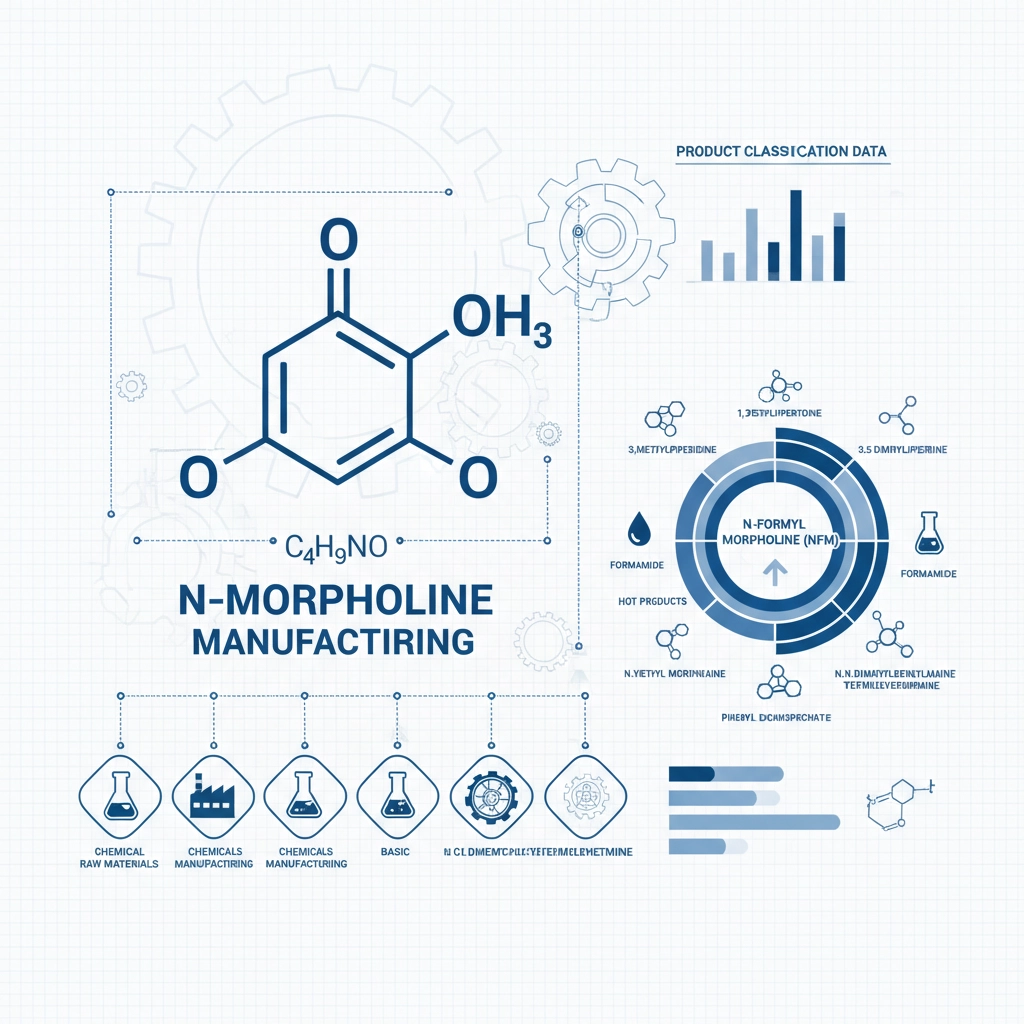
At its most basic level, n morpholine is a secondary amine containing both an amine group and an ether group within a six-membered ring. This unique structure provides it with a dual personality: it can act as a base and a nucleophile, while the ether oxygen adds a level of polarity and solubility that simple aliphatic amines lack. This chemical "amphiphilicity" is what makes it such a powerful tool in organic synthesis.
In the context of modern industry, n morpholine is more than just a reagent; it is a facilitator of humanitarian needs through its role in medicine. By serving as a key intermediate in the synthesis of various drugs, it directly contributes to the global healthcare infrastructure, enabling the production of affordable and effective treatments for a wide range of pathologies.
Moreover, its role extends to industrial preservation. As a corrosion inhibitor in steam boiler systems, n morpholine helps maintain the integrity of critical infrastructure, preventing costly failures and enhancing the safety of industrial plants. This versatility ensures its relevance across a spectrum ranging from microscopic lab vials to massive industrial piping.
Core Technical Components and Performance Factors
One of the primary performance factors of n morpholine is its exceptional solubility profile. Because it is miscible with both water and a wide variety of organic solvents, it allows chemists to conduct reactions in diverse media, effectively bridging the gap between aqueous and organic phases in biphasic systems.
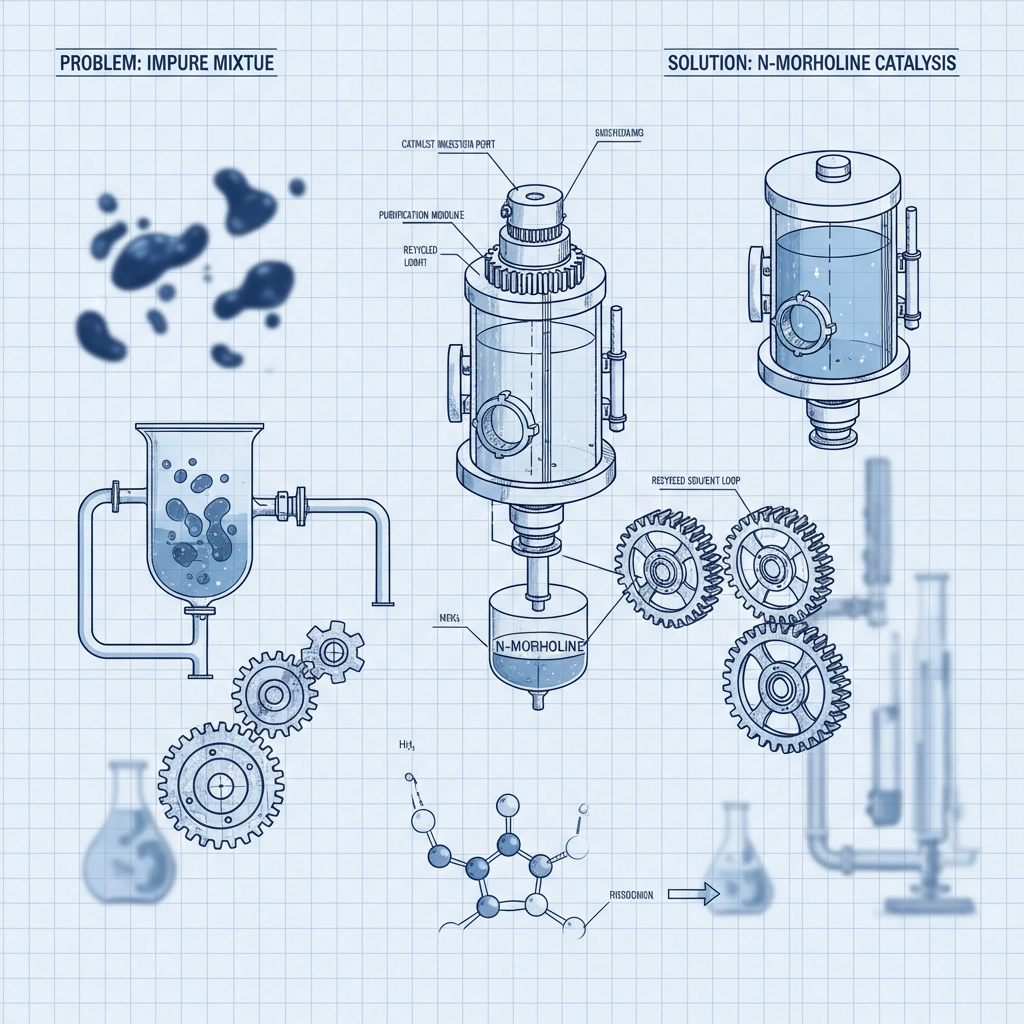
Another critical aspect is its catalytic efficiency. When used as a catalyst or a co-catalyst, n morpholine can significantly lower the activation energy of specific reactions, such as the production of polyurethane foams or the synthesis of specialty resins. This leads to shorter reaction times and reduced energy consumption, directly impacting the bottom line of chemical manufacturing.
Finally, the chemical stability of the morpholine ring ensures that n morpholine remains effective even under moderate thermal stress. This stability is crucial for high-temperature industrial processes, ensuring that the compound does not decompose prematurely and contaminate the final product with unwanted by-products.
Global Applications and Practical Use Cases
The practical application of n morpholine is most evident in the pharmaceutical sector, where it is used to synthesize analgesics and anti-inflammatory agents. In regions with heavy pharmaceutical clusters, such as India and China, the compound is processed into diverse derivatives that eventually reach pharmacies worldwide. Its ability to modulate the lipophilicity of drug molecules makes it a favorite for medicinal chemists designing bioavailable compounds.
Beyond medicine, in remote industrial zones and large-scale power plants, n morpholine is employed as a neutralizing amine. By volatilizing into the steam phase, it prevents the corrosion of condensate return lines, which is critical for the longevity of energy infrastructure in harsh environments. This application demonstrates how a specialized organic chemical provides tangible value to the global energy grid.
Efficiency Comparison of n morpholine Derivatives
Strategic Advantages and Long-Term Value
The adoption of high-quality n morpholine provides an immediate economic advantage by reducing waste and increasing yield. For manufacturers, this translates into lower raw material costs and a reduced environmental footprint. The logical appeal lies in the precision it brings to chemical synthesis, while the emotional value is found in the trust and reliability that consistent purity provides to downstream partners.
In the long term, the value of n morpholine lies in its sustainability. Because it can be used in lower concentrations to achieve the same catalytic effect as traditional amines, it promotes a "less is more" approach to industrial chemistry. This alignment with green chemistry principles ensures that companies using it are better positioned for future regulatory shifts toward eco-friendly manufacturing.
Future Trends and Green Innovations in n morpholine
The future of n morpholine is being shaped by the digital transformation of chemical engineering. Automation and AI-driven synthesis are allowing researchers to find new ways to utilize morpholine derivatives in the creation of biodegradable polymers. By integrating smart sensors and real-time monitoring, the precise addition of this compound can be optimized to eliminate excess waste entirely.
Furthermore, the shift toward green energy is opening new doors. n morpholine is being explored as a component in advanced carbon capture solvents. Its ability to efficiently absorb CO2 and be regenerated with minimal energy makes it a promising candidate for industrial-scale decarbonization projects, transforming a traditional chemical into a tool for climate action.
We are also seeing a move toward bio-based precursors for the synthesis of n morpholine. By replacing petroleum-derived feedstock with renewable biological sources, the entire lifecycle of the compound becomes more sustainable, reducing the carbon intensity of every kilogram produced and aligning with global Net Zero targets.
Challenges and Expert Solutions for Implementation
Despite its benefits, implementing n morpholine in a production line is not without hurdles. The most common challenge is the handling of its corrosive nature and the requirement for specialized storage materials. Many plants struggle with seal degradation in pumps and valves when transitioning to morpholine-based systems, leading to unplanned downtime and maintenance costs.
To overcome these limitations, expert insights suggest the transition to high-grade fluoropolymer gaskets and stainless steel 316L piping. By upgrading the hardware to be compatible with the chemical properties of n morpholine, companies can eliminate leakage and ensure a safer working environment for their operators.
Another challenge involves the strict regulatory compliance regarding volatile organic compounds (VOCs). The solution lies in implementing closed-loop recovery systems that capture evaporated n morpholine and recycle it back into the process. This not only satisfies environmental regulations but also increases the overall cost-efficiency of the operation.
Implementation Analysis of n morpholine in Industrial Systems
| Challenge Dimension |
Impact Level (1-10) |
Recommended Solution |
Expected Outcome |
| Material Corrosion |
8 |
Upgrade to PTFE/Steel 316L |
Zero Leakage |
| VOC Emissions |
7 |
Closed-loop Scrubbing System |
Regulatory Compliance |
| Purity Variance |
6 |
Vacuum Distillation Refinement |
99.9% Purity Level |
| Supply Chain Stability |
5 |
Diversified Vendor Sourcing |
Consistent Lead Times |
| Operator Safety |
9 |
Automated Dosing Systems |
Reduced Human Exposure |
| Reaction Heat Control |
7 |
Precision Cooling Jackets |
Stable Temp Profile |
FAQS
Unlike simple amines, n morpholine combines an ether oxygen and a secondary amine in one ring. This provides superior solubility in both water and organic solvents, allowing it to serve as a more effective catalyst and corrosion inhibitor in diverse environments. It also offers a more balanced basicity, which reduces the risk of over-reaction in sensitive pharmaceutical syntheses.
It acts as a neutralizing amine that volatilizes with the steam. Once in the condensate return lines, it neutralizes carbonic acid, which is the primary cause of corrosion in these systems. By maintaining a slightly alkaline pH in the condensate, n morpholine prevents metal loss and extends the operational life of the piping and boiler components.
Yes, but it requires a controlled approach. By implementing closed-loop recovery systems and ensuring high purity to minimize side-product waste, n morpholine can be used sustainably. Current research into bio-based morpholine synthesis is further reducing its carbon footprint, making it compatible with green chemistry standards.
Due to its corrosive nature and volatility, handlers should use chemical-resistant PPE, including nitrile gloves and face shields. Bulk storage should be in stainless steel or high-density polyethylene (HDPE) containers, kept in well-ventilated areas with secondary containment. Automated dosing systems are highly recommended to minimize direct human contact with the liquid.
High-purity n morpholine (typically >99.5%) is critical because impurities can act as competing nucleophiles, leading to the formation of undesirable side-products. This not only lowers the overall yield but also increases the cost of downstream purification (e.g., chromatography), making high-grade raw materials more cost-effective in the long run.
Not necessarily. While both are morpholine derivatives, n morpholine (secondary amine) has a reactive hydrogen on the nitrogen, whereas N-Methyl Morpholine (tertiary amine) does not. This makes n morpholine suitable for reactions where the nitrogen must be alkylated or acylated, whereas N-Methyl Morpholine is strictly a base or catalyst.
Conclusion
In summary, n morpholine is a powerhouse of modern organic chemistry, providing essential functionality across the pharmaceutical, energy, and manufacturing sectors. Its unique chemical structure allows for unparalleled versatility in solubility and reactivity, while its strategic role as a catalyst and corrosion inhibitor delivers tangible economic and operational value to industries worldwide.
Looking ahead, the transition toward green synthesis and AI-optimized application will only enhance the significance of this compound. We encourage industrial chemists and procurement managers to prioritize high-purity sources to ensure maximum efficiency and regulatory compliance. To explore our high-grade chemical solutions and optimize your production, visit our website: www.sincerechemicals.com