

Diaminobenzene A Comprehensive Guide to Properties Applications and Safety
Diaminobenzene: A Comprehensive Guide to Properties, Applications, and Safety
Diaminobenzene, also known as phenylenediamine, is a versatile aromatic amine with significant applications across various industries. This article provides a detailed overview of diaminobenzene, encompassing its chemical properties, manufacturing processes, diverse applications, safety considerations, and its role in global chemical supply chains. We will explore how Sincere Chemicals provides high-quality diaminobenzene for a wide range of industrial needs. Understanding the nuances of this chemical is crucial for professionals in fields like polymers, dyes, and pharmaceuticals.
Chemical Properties of Diaminobenzene
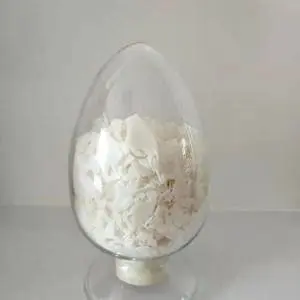
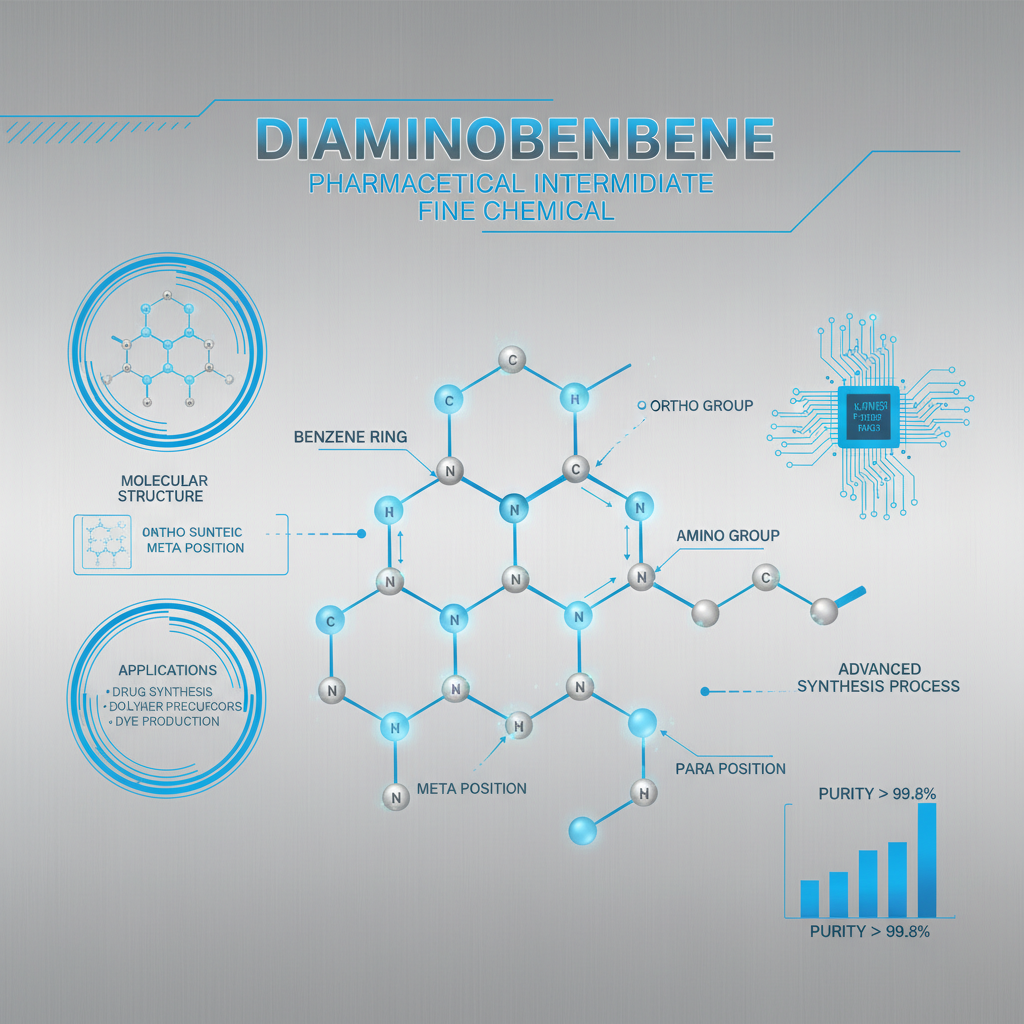
Diaminobenzene exists in three isomeric forms – ortho-, meta-, and para-diaminobenzene – each exhibiting distinct properties. All isomers are colorless or light yellow crystalline solids that darken upon exposure to air and light. They are soluble in organic solvents like ethanol and ether, but only sparingly soluble in water. The presence of two amine groups renders them reactive towards a wide range of chemical reagents, making them valuable building blocks for synthesizing more complex molecules. The key chemical characteristics include its ability to undergo diazotization, coupling reactions, and polymerization. Sincere Chemicals offers various grades of diaminobenzene tailored to specific application requirements.
Key Highlights: Diaminobenzene's reactivity stems from its two amine groups, facilitating a diverse array of chemical transformations. Its isomeric forms present unique properties that influence its suitability for different applications.
Manufacturing Processes of Diaminobenzene
The primary method for producing diaminobenzene involves the reduction of dinitrobenzene. This reduction can be achieved through various techniques, including catalytic hydrogenation and chemical reduction using metal and acid combinations. The catalytic hydrogenation process typically employs a nickel or palladium catalyst, offering high selectivity and efficiency. Chemical reduction often uses iron filings and hydrochloric acid, although this method can generate substantial waste. Sincere Chemicals utilizes advanced manufacturing processes to ensure high purity and consistent quality of its diaminobenzene products.
Manufacturing Methods:
• Catalytic Hydrogenation: High selectivity, efficient, uses a catalyst.
• Chemical Reduction: Uses metals and acids, generates more waste.
Diaminobenzene Applications Across Industries
Diaminobenzene finds widespread application in the production of polymers, particularly polyamides and polyurethanes, contributing to materials with enhanced thermal stability and mechanical strength. It serves as a crucial intermediate in the synthesis of azo dyes, providing vibrant colors for textiles, leather, and paper. Furthermore, it is used in the pharmaceutical industry as a precursor for various drugs and medications. Other applications include its use as a curing agent for epoxy resins and as a component in photographic developers. Sincere Chemicals caters to diverse industry needs with a comprehensive range of diaminobenzene grades.
Safety Considerations When Handling Diaminobenzene
Diaminobenzene is classified as a hazardous chemical and requires careful handling. It can cause skin and eye irritation, and inhalation of dust or vapors may lead to respiratory problems. Prolonged exposure can cause sensitization and allergic reactions. Therefore, appropriate personal protective equipment (PPE), including gloves, goggles, and respirators, should always be worn when handling this chemical. Work areas should be well-ventilated, and proper storage procedures must be followed to prevent accidental release or contamination. Sincere Chemicals provides comprehensive safety data sheets (SDS) for all its products, detailing handling and safety procedures.
Diaminobenzene Product Specifications
At Sincere Chemicals, we offer diaminobenzene with varying specifications to meet diverse industrial requirements. The following table details the key properties of our standard product:
Conclusion: Diaminobenzene – A Critical Chemical Building Block
Diaminobenzene’s versatile properties make it an indispensable chemical intermediate across a wide range of industries. From polymers and dyes to pharmaceuticals, its applications are constantly evolving. Sincere Chemicals is committed to providing high-quality diaminobenzene products, coupled with exceptional customer service and unwavering dedication to safety. Partner with us for reliable supply and expert support.
Frequently Asked Questions (FAQs)
What are the primary differences between the isomers of diaminobenzene?
The ortho-, meta-, and para-diaminobenzene isomers differ in the positions of the amine groups relative to each other on the benzene ring. This positional difference significantly impacts their chemical reactivity and physical properties. For instance, the para-isomer generally exhibits higher melting points and greater stability. The ortho-isomer often undergoes intramolecular hydrogen bonding, influencing its solubility and reactivity. These differences make each isomer suitable for specific applications. The choice of isomer depends on the desired properties of the final product. Sincere Chemicals offers a range of diaminobenzene isomers to suit specific requirements.
How should diaminobenzene be stored to maintain its quality?
Diaminobenzene should be stored in a tightly closed container in a cool, dry, and well-ventilated area, away from direct sunlight, heat, and incompatible materials like oxidizing agents. Protect it from moisture and air exposure, as it can darken and degrade upon contact. Long-term storage should be under an inert atmosphere (e.g., nitrogen) to prevent oxidation. Always refer to the Safety Data Sheet (SDS) for specific storage recommendations provided by the manufacturer, like Sincere Chemicals.
What industries are the largest consumers of diaminobenzene?
The polymer industry, particularly manufacturers of polyamides and polyurethanes, constitutes the largest consumer of diaminobenzene. The dye and pigment industry also represents a significant market share, utilizing it as a key intermediate in azo dye production. The pharmaceutical sector, requiring it for the synthesis of various drugs, and the epoxy resin industry, utilizing it as a curing agent, are other important consumers. Demand is also driven by specialty chemical applications and research institutions.
What safety measures are essential when handling diaminobenzene in a laboratory setting?
When handling diaminobenzene in a laboratory, always wear appropriate personal protective equipment (PPE), including safety goggles, gloves, and a lab coat. Work in a well-ventilated area or under a fume hood to avoid inhaling dust or vapors. Avoid contact with skin and eyes. In case of contact, immediately flush with plenty of water and seek medical attention. Handle the chemical with care to prevent spills, and have spill cleanup materials readily available. Dispose of waste properly following established laboratory procedures and regulations. Refer to the SDS provided by suppliers like Sincere Chemicals for detailed safety guidelines.
Post time: Mar . 14, 2026 02:40