deionised formamide, at its core, is a high-purity form of formamide—an organic compound—stripped of its ionic contaminants. Now, that sounds like lab-speak, right? But out here on the job site, it translates to reliability. We’re talking about a solvent critical for specialized applications, where even trace impurities can throw a whole process off. It's not about theoretical purity; it's about the concrete results – consistent reactions, predictable outcomes, and fewer costly rework orders. From pharmaceutical manufacturing to electronics, the demand for consistently pure deionised formamide is steadily climbing, driven by increasingly stringent industry standards and the need for dependable chemical processes.
The real need stems from the growing complexity of modern manufacturing. We used to get by with ‘good enough,’ but today’s technologies require incredibly precise chemical environments. Take semiconductor fabrication, for example; one stray ion can ruin an entire wafer. Or consider advanced polymer synthesis—getting the right molecular weight distribution depends on incredibly clean starting materials. Globally, the market is seeing a surge in demand from emerging tech hubs in Asia and Eastern Europe, all striving to up their manufacturing game. The UN Industrial Development Organization (UNIDO) emphasizes the importance of high-quality chemical inputs for sustainable industrial growth, and deionised formamide fits squarely into that equation.
Simply put, deionised formamide is formamide that’s been rigorously purified to remove ions. Think of it like filtering water, but at a molecular level. Formamide itself is a versatile solvent and chemical intermediate, used in everything from textile processing to agriculture. But for sensitive applications, the ions present in standard formamide—sodium, chloride, even trace metals—can act as catalysts, inhibitors, or contaminants, messing with the desired outcome. So, we deionize it, removing those interfering ions and delivering a solvent that's as close to pure as possible. That's the difference between a process that works reliably and one that’s constantly fighting uphill battles.
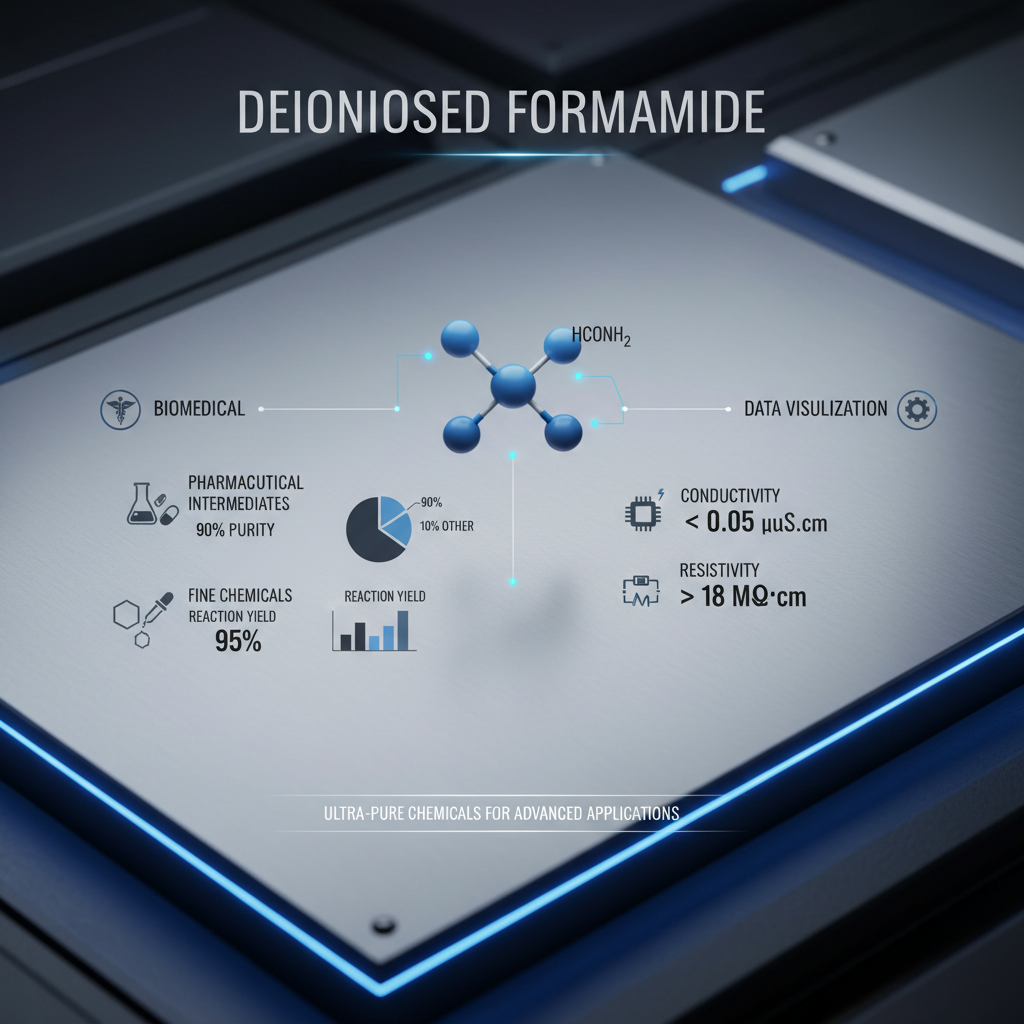
The story of deionised formamide isn't about a sudden invention, it's a story of refinement. Formamide itself has been known since the late 19th century, initially synthesized as a byproduct of formic acid production. However, its early uses were limited because of inherent impurities. The demand for higher purity arose with the advent of more sensitive analytical techniques and the rise of industries needing exacting chemical control. The real breakthrough came with the development of robust ion exchange resins in the mid-20th century—that's what allowed us to effectively remove those troublesome ions at scale.
Initially, deionised formamide was primarily a niche product, used in specialized research labs. But as the electronics industry took off, particularly with the push for microelectronics and semiconductors, the demand exploded. Companies started realizing you couldn’t reliably etch silicon wafers or grow high-quality crystals with standard-grade formamide. That drove further innovation in purification techniques – from improved resin formulations to novel distillation methods – culminating in the consistently high-purity deionised formamide available today.
Deionised formamide, when stored properly in a sealed container under dry and inert conditions, typically has a shelf life of at least two years. However, prolonged exposure to air and moisture can lead to degradation and re-absorption of ionic contaminants, reducing its purity. It's best practice to check the purity before use, especially if the container has been opened for a while. Always refer to the Certificate of Analysis (CoA) for specific batch information.
The purification process for deionised formamide is significantly more complex and energy-intensive than producing standard formamide, driving up its cost. You can expect to pay a premium—often several times higher—for the deionised version. This cost reflects the higher purity, rigorous quality control, and specialized handling requirements. However, the cost is usually justified by the improved performance and reduced risk of failures in sensitive applications.
In electronics, deionised formamide plays a crucial role in semiconductor manufacturing. Specifically, it’s used as a solvent for photoresist stripping—removing the photoresist layer after etching. Its high purity is essential to prevent contamination of the silicon wafers. It is also used in cleaning processes, and as a component in certain specialized coatings. The demand for ultra-pure deionised formamide is driven by the ever-increasing miniaturization of electronic devices.
Deionised formamide is a corrosive material and should be transported in UN-approved packaging. Typically, this involves using high-density polyethylene (HDPE) drums or carboys, sealed with tamper-evident closures. The packaging must be labeled with the appropriate hazard warnings and shipping information, in compliance with regulations like IMDG (sea) or IATA (air). Proper cushioning and securing of the containers during transit are also essential to prevent leaks or damage.
Recycling deionised formamide is challenging, as the purification process becomes costly and complex once it's been used in a process and potentially contaminated. However, some companies offer reclamation services, where the spent formamide is treated to remove contaminants and restored to a usable purity level. This is typically more cost-effective than purchasing new material, and it reduces environmental waste. The feasibility of reclamation depends on the type and level of contamination.
Always wear appropriate personal protective equipment (PPE), including chemical-resistant gloves, safety glasses with side shields, and a lab coat. Work in a well-ventilated area to avoid inhaling vapors. Avoid contact with skin and eyes. In case of contact, flush immediately with plenty of water and seek medical attention. Refer to the Safety Data Sheet (SDS) for detailed safety information and emergency procedures.
In closing, deionised formamide isn't just a chemical; it’s an enabler. It’s the silent workhorse behind countless technological advancements, ensuring reliability and precision in critical applications. From the intricate circuits in our smartphones to life-saving pharmaceuticals, its role is often unseen but undeniably vital. The future of deionised formamide lies in sustainable production methods, enhanced purification techniques, and a continued commitment to quality and safety.
Looking ahead, we need to focus on minimizing the environmental impact of its production and embracing circular economy principles. Investing in research and development to create more efficient purification processes and explore bio-based alternatives will be key. The demand for high-purity solvents is only going to grow, and we need to be prepared to meet that demand responsibly and sustainably. Visit our website at deionised formamide to learn more about our products and services.