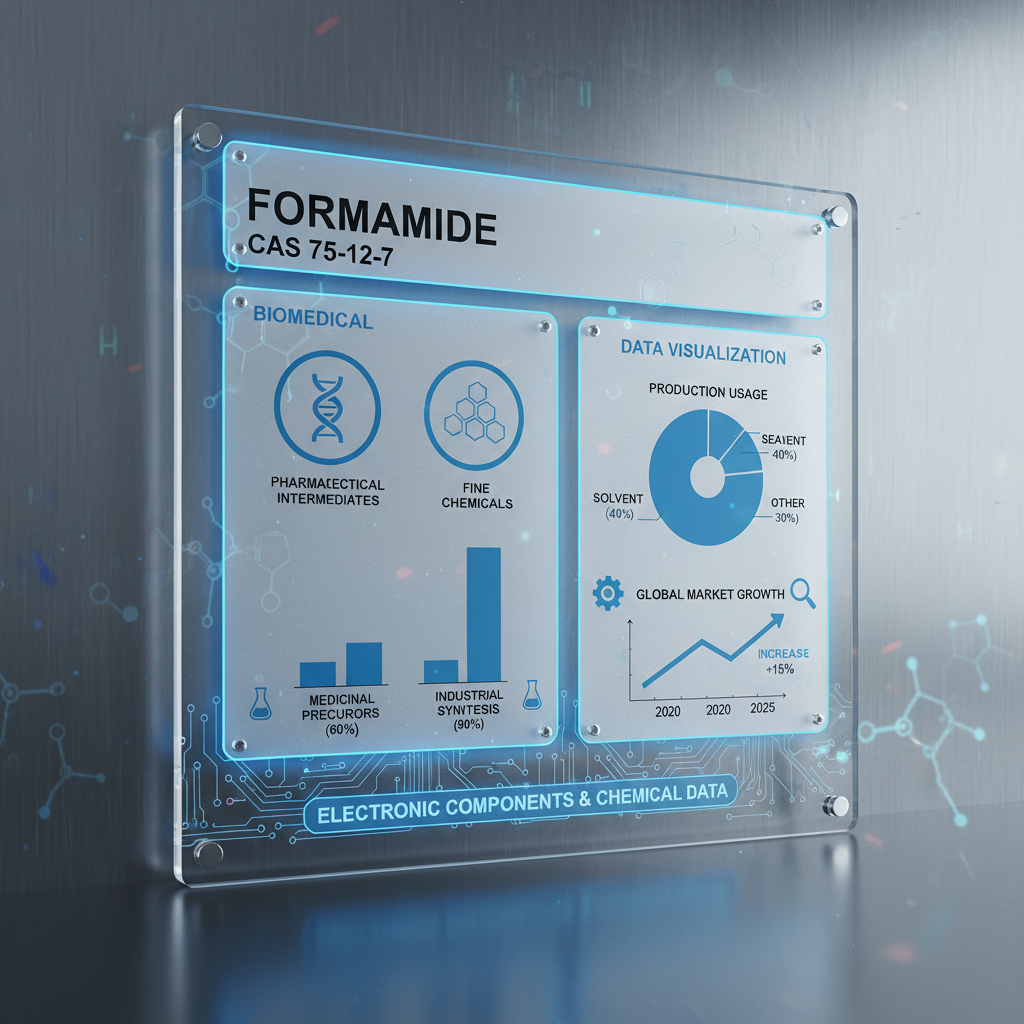
Formamide cas 75 12 7, at its core, is a clear, colorless liquid with a faint ammonia-like odor. It’s deceptively simple in appearance, but incredibly versatile – a workhorse chemical that quietly underpins a surprising number of industries. We’re not talking about some lab curiosity here; this stuff is moving in significant volumes globally, touching everything from agriculture to textiles. The growing demand isn't just about existing applications expanding, but about finding new ways to leverage its properties. We’re seeing increased interest in its role as a solvent, a chemical intermediate, and even in newer technologies like gas treating.
The global relevance of formamide cas 75 12 7 stems from its wide applicability and relatively low cost. According to industry reports, the global formamide market is projected to grow steadily in the coming years, driven by demand in the agrochemical and pharmaceutical sectors. It's a key component in the production of pesticides, herbicides, and various pharmaceutical intermediates. Understanding its properties and handling procedures isn't just a matter of chemical safety; it's about ensuring the efficient and reliable supply of products that impact food security and public health worldwide.
What makes formamide unique is its ability to dissolve a wide range of organic and inorganic compounds. It’s a powerful solvent, but unlike some alternatives, it’s also miscible with water. This blend of characteristics makes it ideal for various chemical processes, and more importantly, relatively easy to work with on the ground, even in less-than-ideal field conditions. It's not glamorous, but a lot of what keeps modern industries running relies on chemicals like formamide cas 75 12 7.
The Global Significance of formamide cas 75 12 7
Formamide cas 75 12 7 isn't a chemical that grabs headlines, but its presence is woven into the fabric of modern manufacturing. You'll find it facilitating processes in everything from producing high-performance polymers to synthesizing vital pharmaceuticals. Its importance is amplified in regions with significant agricultural sectors, where it's a crucial ingredient in the production of pesticides and herbicides. The United Nations Food and Agriculture Organization (FAO) highlights the need for sustainable agricultural practices, and chemicals like formamide, when used responsibly, play a role in maximizing crop yields.
The challenge, as always, is balancing the benefits with responsible handling and environmental considerations. We see stricter regulations emerging globally regarding chemical handling and waste disposal, and that pushes the demand for higher-quality formamide and improved process controls. The need for sustainable sourcing and minimizing environmental impact is no longer just a ‘nice to have’; it's a fundamental requirement for continued operation in many jurisdictions.
Defining formamide cas 75 12 7: A Chemical Workhorse
Simply put, formamide cas 75 12 7 is a derivative of formic acid. It’s an amide, meaning it’s formed from a carboxylic acid and ammonia. But that chemical definition doesn’t really capture its utility. It’s a colorless liquid, highly polar, and crucially, a fantastic solvent. Think of it like a universal translator for chemistry – it allows different compounds to interact that wouldn't normally mix. This makes it invaluable in a huge range of chemical reactions.
Its connection to modern industry isn't just historical. We’re seeing a resurgence in interest due to its potential in newer applications, like carbon capture technologies and as a solvent in specialized lithium-ion battery electrolytes. These cutting-edge uses are driving innovation and expanding the demand beyond traditional agricultural and pharmaceutical applications. It’s a chemical that's proving to be remarkably adaptable.
From a practical standpoint, working with formamide means understanding its hygroscopic nature – it readily absorbs moisture from the air. This is a critical factor in storage and handling, as water contamination can affect its purity and performance. I've seen plenty of projects delayed because this simple fact was overlooked. Proper storage and quality control are paramount.
Key Properties of formamide cas 75 12 7
The most important property of formamide cas 75 12 7 is its exceptional solvency. It dissolves a wide range of organic and inorganic compounds, making it incredibly versatile in chemical processes. High dielectric constant is also a factor – it effectively separates ions, which is critical in many chemical reactions. Its high boiling point (210 °C) provides thermal stability, allowing for reactions at elevated temperatures without significant loss of solvent.
Beyond the chemical properties, its miscibility with water is a huge advantage. It means you can easily dilute or wash out formamide from reaction mixtures, simplifying purification processes. This characteristic contributes to its ease of handling and reduced environmental impact compared to some alternative solvents. We often discuss with our clients about the environmental impact of different chemicals, and that's where miscibility is a huge plus.
However, it’s not without its drawbacks. Formamide is also hygroscopic – meaning it readily absorbs moisture from the air. This impacts its concentration and can affect reaction yields. It also requires careful handling due to its potential health hazards; appropriate PPE is crucial. You always need to know what you’re working with and follow safety protocols.
Practical Applications and Use Cases of formamide cas 75 12 7
The bread and butter of formamide cas 75 12 7 application is the agrochemical industry. It’s a key intermediate in producing pesticides, herbicides, and plant growth regulators. You’d be hard-pressed to find a major herbicide manufacturer that doesn't rely on formamide somewhere in their production process. Beyond agriculture, it’s heavily used in the textile industry as a solvent for dyes and in the production of acrylic fibers.
We're also seeing growing demand from the pharmaceutical sector, where it serves as a building block for synthesizing various drug intermediates. In gas treating, it's used to remove acidic gases like carbon dioxide and hydrogen sulfide from natural gas streams. This is becoming increasingly important as we strive to utilize more natural gas resources and meet stricter emission standards.
Application Areas of formamide cas 75 12 7
Global Industries Utilizing formamide cas 75 12 7
The agriculture sector, particularly in countries like China, India, and the United States, represents a significant portion of formamide cas 75 12 7 consumption due to the high demand for herbicides and pesticides. The textile industry in Asia, especially in China and Bangladesh, also contributes substantially to demand as a solvent for dyes.
We’re seeing increased activity in Europe and North America in the pharmaceutical sector, driven by demand for complex drug intermediates. Furthermore, gas processing plants in the Middle East and North America utilize formamide for acid gas removal. These regional differences highlight the diverse applications and global reach of this seemingly simple chemical.
Advantages and Long-Term Value of formamide cas 75 12 7
The primary advantage of formamide cas 75 12 7 is its cost-effectiveness. It’s a relatively inexpensive solvent compared to many alternatives, making it attractive for large-scale industrial processes. Its high solvency power also reduces the need for multiple solvents, simplifying processes and lowering costs. From a sustainability standpoint, its recyclability and potential for closed-loop systems offer long-term environmental benefits.
The long-term value lies in its versatility. As new applications emerge – like in battery technology and carbon capture – the demand will only increase. Investing in reliable sourcing and safe handling practices ensures a stable supply chain and minimizes risk. It's about building a resilient process around a dependable chemical building block.
Future Trends and Challenges Regarding formamide cas 75 12 7
The future of formamide cas 75 12 7 is tied to green chemistry and sustainable practices. We’re seeing research focused on developing more efficient and environmentally friendly production methods. The exploration of bio-based formamide, derived from renewable resources, is a key trend to watch. The integration of formamide into carbon capture technologies holds immense potential for mitigating climate change.
However, challenges remain. Stricter regulations regarding chemical handling and waste disposal require continuous improvement in safety protocols and environmental controls. Competition from alternative solvents and the potential for supply chain disruptions are also ongoing concerns. Adapting to these challenges requires proactive investment in research, innovation, and responsible sourcing.
The biggest shift will be around circular economy principles. Finding ways to recover and reuse formamide from waste streams will be crucial for both economic and environmental sustainability. It’s a move toward a more responsible and resilient chemical industry, and formamide will play a vital role in that transformation.
Analysis of formamide cas 75 12 7's Key Performance Indicators
| Production Cost (USD/ton) |
Environmental Impact Score (1-10) |
Application Versatility (1-10) |
Supply Chain Reliability (1-10) |
| 500-700 |
6 |
9 |
7 |
| 550-750 |
5 |
8 |
8 |
| 480-680 |
7 |
9 |
6 |
| 600-800 |
6 |
7 |
9 |
| 520-720 |
5 |
8 |
7 |
| 490-690 |
6 |
9 |
8 |
FAQS
Handling formamide cas 75 12 7 requires wearing appropriate personal protective equipment (PPE), including gloves, safety glasses, and a lab coat. Ensure adequate ventilation in the work area to avoid inhalation of vapors. Avoid contact with skin and eyes, and in case of contact, rinse thoroughly with water. Always consult the Safety Data Sheet (SDS) for detailed safety information. It's not a chemical to take lightly; respect its properties, and you’ll be fine.
Formamide cas 75 12 7 is hygroscopic, meaning it readily absorbs moisture from the air. Therefore, it should be stored in tightly sealed containers in a cool, dry, and well-ventilated area. Avoid exposure to direct sunlight and heat sources. Keep the container closed when not in use to prevent water contamination and maintain its concentration. Proper storage is key to consistent results.
Formamide cas 75 12 7 should not be discharged into the environment. It must be disposed of in accordance with local, regional, and national regulations. Incineration is often the preferred method, but always consult with a qualified waste disposal service for proper handling and disposal procedures. Prioritizing responsible waste management is essential for minimizing environmental impact.
Yes, formamide cas 75 12 7 can be recycled or reused in some industrial processes, especially in closed-loop systems. Distillation and other purification methods can be employed to recover formamide from waste streams. Implementing recycling programs not only reduces waste but also lowers production costs and minimizes environmental impact. It's a win-win situation.
When stored properly in a sealed container, away from moisture and heat, formamide cas 75 12 7 typically has a shelf life of several years. However, it’s essential to periodically check the purity and quality of the material, especially after prolonged storage. Look for any signs of discoloration or contamination before using it in critical applications.
Depending on the application, potential alternatives to formamide cas 75 12 7 include dimethylformamide (DMF), dimethylacetamide (DMAc), and N-methylpyrrolidone (NMP). However, each alternative has its own set of properties, safety considerations, and environmental impacts. Carefully evaluate the specific requirements of the application before considering a substitution.
Conclusion
Formamide cas 75 12 7 is a workhorse chemical that quietly supports a vast array of industries, from agriculture and textiles to pharmaceuticals and gas processing. Its unique properties – high solvency, miscibility with water, and thermal stability – make it an invaluable component in many critical processes. Understanding its handling, safety considerations, and emerging trends is essential for anyone working in these fields.
Looking ahead, the future of formamide lies in sustainable practices, innovative applications, and a commitment to responsible chemical management. As we strive for a more circular economy, finding ways to recycle and reuse formamide will be crucial. We encourage you to explore the possibilities and discover how formamide cas 75 12 7 can contribute to your success. Visit our website at formamide cas 75 12 7 to learn more.