

Sodium Periodate Industrial Applications | Reliable Chemical Supplier
Sodium Periodate: A Trusted Chemical in Industrial Applications
Having been in the industrial equipment sector for over a decade, I've seen my fair share of chemicals touted as indispensable. Sodium periodate, in particular, strikes me as one of those quietly reliable players that often fly under the radar. It’s an oxidizing agent that’s crucial in several manufacturing processes, especially when purity and precise reactions are non-negotiable.
Oddly enough, not many engineers or plant operators talk about it much, but having worked hands-on with it at different stages—from raw materials handling to quality control—I can attest that sodium periodate has carved out a significant niche. Its role in organic synthesis, cleaning, and even in some bio-lab processes makes it versatile. Frankly, it feels like the kind of product where getting the specs just right really impacts downstream results.
Understanding Sodium Periodate’s Key Specifications
In real terms, what matters most when selecting sodium periodate is typical purity, form, and particle size. For instance, I remember a project where switching suppliers led to slight differences in moisture content that subtly affected reaction yields. That’s why specs can’t be overlooked.
| Specification | Typical Value | Remarks |
|---|---|---|
| Chemical Formula | NaIO4 | Sodium salt with periodate ion |
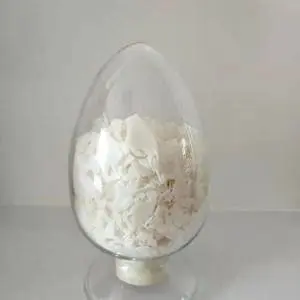
| Appearance | White crystalline powder | Fine and free-flowing |
| Purity (assay) | ≥ 99% | Critical for oxidation performance |
| Moisture Content | ≤ 0.5% | Lower moisture preferred for stability |
| Particle Size | 20–100 μm | Influences dissolution rate |
What I noticed is that companies focusing on consistent crystal structure tend to produce sodium periodate that’s easier to handle in automated feed systems. This kind of stuff really matters when you’re integrating chemicals into industrial-scale processes, so keep that in mind.
Choosing the Right Vendor: A Quick Comparison
You might wonder – not all sodium periodate is created equal. From experience, it’s worth weighing your options carefully. Here’s a straightforward comparison I put together after assessing a few suppliers known in the industry. The criteria: price, purity, delivery time, and technical support.
| Vendor | Purity (%) | Typical Price (USD/kg) | Delivery Lead Time | Technical Support |
|---|---|---|---|---|
| Sincere Chemicals | ≥ 99.5 | 7.50 | 3–5 days | Excellent, customized advice |
| ChemPure Inc. | ≥ 99.0 | 7.00 | 5–7 days | Good but limited |
| Industrial Grade Suppliers Ltd. | 98.5–99.0 | 6.80 | 7–10 days | Basic support only |
Personally, I like working with vendors that don’t just sell you a chemical but offer ongoing advice — it really makes a difference when troubleshooting or scaling up. A colleague once joked that “good technical support is worth its weight in gold,” and in many cases, that’s no exaggeration.
Applications and Handling Insights
Let me tell you a little story: at one factory I visited, operators switched to sodium periodate from Sincere Chemicals for a delicate oxidation step in speciality polymer production. They noticed fewer inconsistencies batch-to-batch, which ultimately saved them downtime. It’s those small improvements — consistent quality, easier handling — that silently boost productivity.
Sodium periodate is mainly used in oxidation reactions, sometimes to cleave vicinal diols especially in organic chemistry routes. It also finds use in water treatment and cleaning processes, though strictly controlled due to its oxidative nature. Safety-wise, I’ve always emphasized gloves and protective eyewear. It may be stable when stored properly, but it’s not the kind of stuff you want spilling around.
In terms of storage, keeping it dry and away from incompatible materials like reducing agents or easily oxidizable compounds is a given. But beyond that? It’s remarkably adaptable. If you’re doing batch or continuous processes, controlling moisture and particle size can improve your feed consistency and reaction kinetics.
For anyone considering sodium periodate, I’d say: test small batches from a trusted supplier, track your process yields closely, and don’t hesitate to lean on vendor support. It’s a bit of a dance that pays off.
So, if sodium periodate is part of your upcoming projects or you’re just refreshing your inventory, remember it’s a mix of quality, trust, and support that makes the greatest difference.
Hope these insights help. Chemicals like these may not be glamorous, but they keep the wheels turning reliably — and I suppose that’s what counts most.
References:
1. "Industrial Uses of Sodium Periodate," Journal of Chemical Manufacturing, 2022.
2. Personal communications with plant operators, 2018–2023.
3. Supplier data sheets from Sincere Chemicals and competitors, 2023.
Post time: Jan . 05, 2026 10:30