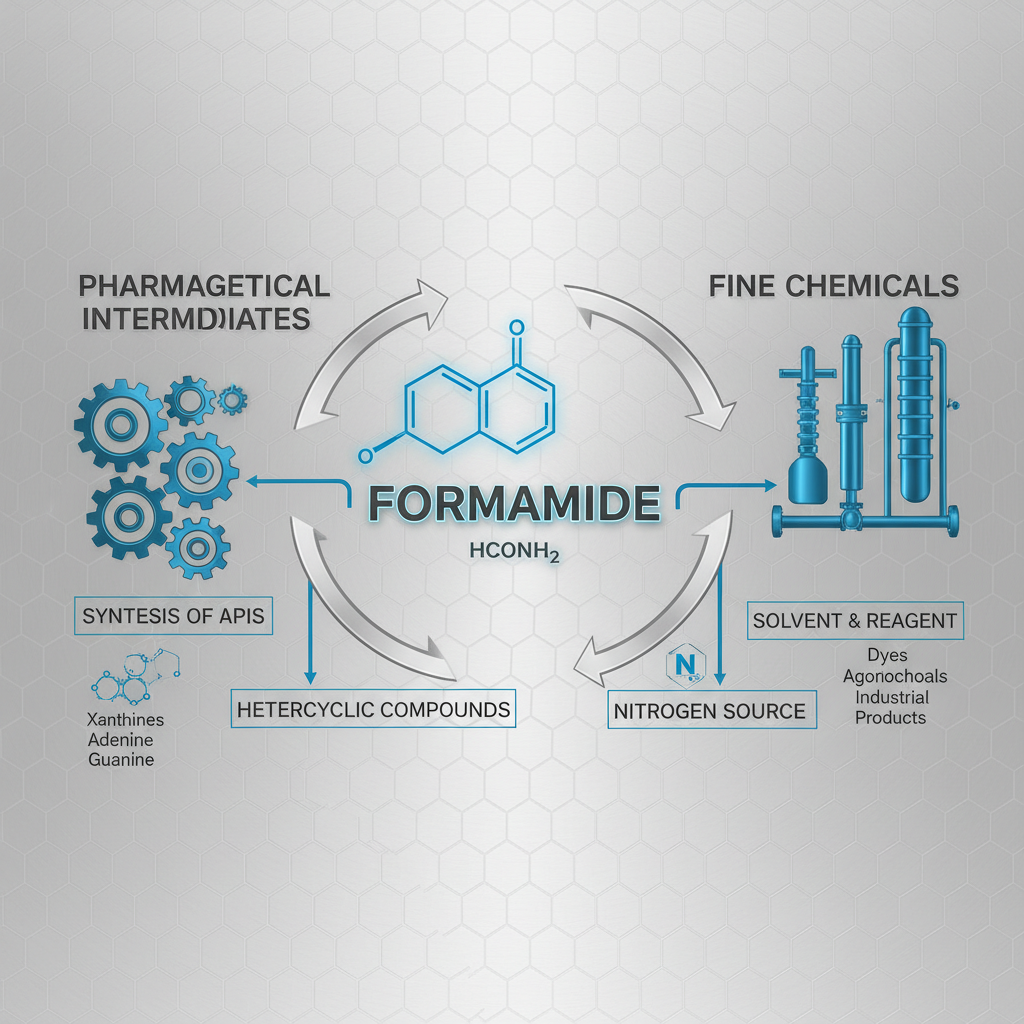
Formamide, a simple yet versatile organic compound, serves as a critical building block in the global chemical industry. Its unique polar properties and ability to dissolve a wide range of organic and inorganic substances make formamide use indispensable in the synthesis of pharmaceuticals, agricultural chemicals, and advanced polymers. Understanding its multifaceted applications allows manufacturers to optimize production efficiency while maintaining high purity standards.
Across the global market, the strategic implementation of formamide in solvent systems has revolutionized the way complex organic molecules are synthesized. From acting as a precursor to other chemical agents to serving as a specialized solvent in histology and biotechnology, the utility of this compound spans across diverse scientific domains. As industries push toward more refined chemical processes, the demand for high-grade formamide continues to grow.
However, the industrial application of this substance requires a deep understanding of its chemical behavior and safety protocols. By balancing its high solvency power with rigorous handling standards, companies can unlock significant value in the production of specialized resins and fine chemicals. This guide explores the comprehensive scope of formamide use, providing technical insights for professionals in the organic chemical manufacturing sector.
Global Industrial Relevance of Formamide Use
The global chemical landscape relies heavily on the versatility of aprotic solvents. In this context, formamide use has become a cornerstone for the production of various nitrogen-containing compounds. According to industrial trends aligned with ISO standards for chemical purity, formamide is preferred in sectors where high polarity is required to stabilize transition states during complex synthesis, effectively reducing the energy barriers of critical reactions.
Beyond simple synthesis, its role in the pharmaceutical industry is paramount, particularly in the creation of active pharmaceutical ingredients (APIs). The ability of formamide to act as both a solvent and a reactant allows for the streamlined production of heterocycles. This dual functionality minimizes the number of processing steps, thereby reducing waste and increasing the overall yield of high-value chemical products.
Chemical Properties Driving Industrial Utility
The primary driver behind the widespread formamide use is its exceptional dipole moment and high dielectric constant. These properties enable the compound to dissolve a vast array of polar substances that are otherwise insoluble in common organic solvents. This makes it an ideal medium for reactions involving inorganic salts or highly polar organic intermediates, ensuring a homogeneous reaction mixture and consistent product quality.
Furthermore, the stability of the amide bond under specific conditions allows it to function as a reliable medium for high-temperature reactions. Unlike some volatile solvents, formamide's boiling point is high enough to facilitate thermal acceleration of reactions without requiring pressurized vessels in many standard applications. This reduces capital expenditure on equipment while maintaining high throughput in chemical plants.
From a molecular standpoint, its ability to form hydrogen bonds with solutes enhances the solubility of proteins and nucleic acids, which is why it is frequently employed in specialized biochemical research. This bridge between heavy industrial chemistry and delicate biotechnology underscores the unique position formamide holds in the chemical hierarchy.
Core Components of Solvent Efficiency
When analyzing the efficiency of formamide use, durability of the solvent under catalytic stress is a primary factor. The compound must maintain its integrity without decomposing into formic acid or ammonia prematurely, which could otherwise contaminate the final product or deactivate the catalyst.
Scalability is another core component. In large-scale organic chemical manufacturing, the transition from laboratory-scale synthesis to industrial-tonnage production requires a solvent that behaves predictably. Formamide's consistent viscosity and thermal expansion coefficients ensure that heat transfer remains uniform across large reactors.
Cost-efficiency remains a decisive factor for procurement managers. Because formamide can be synthesized from relatively inexpensive ammonia and carbon monoxide, it provides a cost-effective alternative to more expensive polar solvents like DMF or DMSO in specific synthesis routes, without sacrificing the necessary solvency power.
Key Performance Metrics in Chemical Synthesis
To quantify the success of formamide use in a production line, engineers monitor several key performance indicators (KPIs). These include the rate of solute dissolution, the stability of the reaction temperature, and the ease of solvent recovery during the distillation phase. By optimizing these metrics, plants can significantly lower their operational costs.
The following data represents a comparative analysis of formamide's performance against other common polar solvents in a standard synthesis scenario, focusing on solvency, cost-effectiveness, and recovery rates.
Comparative Efficiency of Formamide Use in Synthesis
Global Applications and Real-World Use Cases
In the agrochemical sector, formamide use is critical for the synthesis of herbicides and pesticides. By utilizing formamide as a medium, manufacturers can achieve higher selectivity in the molecular orientation of the active ingredients, leading to products that are more effective at lower concentrations, thereby reducing the environmental footprint of farming operations.
In the electronics industry, particularly in the manufacturing of printed circuit boards (PCBs), formamide-based solutions are used in specialized cleaning and etching processes. Its ability to remove organic contaminants without damaging the underlying metallic substrates makes it a preferred choice in high-precision industrial zones across East Asia and North America.
Long-Term Value and Sustainability Benefits
The long-term value of integrating high-purity formamide into production cycles lies in the reliability of the output. When a process is standardized around the specific solvency of formamide, the variance in batch quality decreases significantly. This reliability builds trust with downstream clients in the pharmaceutical and fine chemical industries, where purity is non-negotiable.
From a sustainability perspective, the industry is moving toward closed-loop solvent recovery systems. Because formamide has a high boiling point and remains stable during vacuum distillation, it can be recovered and reused multiple times. This not only lowers the total cost of ownership but also aligns with "Green Chemistry" principles by reducing the volume of chemical waste sent to incineration.
Furthermore, the social impact of efficient chemical synthesis cannot be overlooked. By optimizing the production of essential medicines and fertilizers through better solvent choices, the global supply chain becomes more resilient, ensuring that critical materials reach developing regions more affordably and reliably.
Future Innovations in Organic Amide Processing
The future of formamide use is closely linked to the digitalization of chemical plants. AI-driven process control systems are now being used to monitor the real-time concentration and purity of formamide in reactors, allowing for precise adjustments that maximize yield and minimize the formation of by-products.
Additionally, research into bio-based precursors for formamide synthesis is gaining momentum. By shifting from fossil-fuel-derived carbon monoxide to captured CO2, the carbon footprint of producing this essential solvent can be drastically reduced, transforming it from a traditional industrial chemical into a sustainable raw material.
The integration of automation in the recovery phase is also set to transform the industry. Advanced membrane filtration technologies are being developed to separate formamide from reaction mixtures more efficiently than traditional distillation, potentially reducing energy consumption by up to 30%.
Analysis of Formamide Use Across Different Industrial Sectors
| Industrial Sector |
Primary Function |
Efficiency Score (1-10) |
Environmental Impact |
| Pharmaceuticals |
API Intermediate Synthesis |
9.5 |
Low (Closed Loop) |
| Agrochemicals |
Herbicide Formulation |
8.8 |
Moderate |
| Biotechnology |
DNA/RNA Denaturation |
9.2 |
Low |
| Electronics |
Precision Etching/Cleaning |
7.5 |
Moderate |
| Polymer Science |
Resin Solubilization |
8.0 |
Moderate |
| Fine Chemicals |
Specialty Catalyst Medium |
8.5 |
Low |
FAQS
Formamide is highly valued due to its high dielectric constant and strong polarity, which allow it to dissolve both polar organic compounds and inorganic salts. This makes it an excellent medium for reactions that require a homogeneous environment to ensure high yields and purity of the final product.
By serving as both a solvent and a chemical precursor, formamide reduces the number of reagents needed in a synthesis route. Its relative affordability compared to other aprotic solvents like DMSO, combined with its high recovery rate via vacuum distillation, significantly lowers the overall operational cost per batch.
Yes, provided that standard industrial safety protocols are followed. While it requires careful handling to avoid inhalation or skin contact, its high boiling point makes it less volatile than many organic solvents, reducing the risk of accidental vapor inhalation in well-ventilated industrial environments.
Absolutely. Due to its thermal stability and predictable boiling point, formamide is ideally suited for recovery through vacuum distillation. Many modern plants implement closed-loop systems that recover up to 90-95% of the solvent, aligning with environmental sustainability goals.
Common alternatives include N,N-Dimethylformamide (DMF) and Dimethyl Sulfoxide (DMSO). While these may offer different solubility profiles, formamide is often chosen when a higher degree of polarity or a specific reactant functionality is required for the synthesis of amides or heterocycles.
Purity is ensured through rigorous distillation and moisture control. For high-precision applications, it is recommended to source formamide from certified manufacturers who provide detailed Certificates of Analysis (CoA) confirming the absence of formic acid and ammonia contaminants.
Conclusion
In summary, the strategic application of formamide use provides an essential balance of high solvency, chemical versatility, and cost-efficiency. From its critical role in pharmaceutical API synthesis to its utility in high-precision electronics cleaning, this compound remains a fundamental tool for the organic chemical industry. By optimizing recovery processes and leveraging its unique polar properties, manufacturers can achieve superior product purity while maintaining economic viability.
Looking forward, the transition toward greener production methods and AI-integrated process control will further enhance the value of formamide. Companies that prioritize high-purity sourcing and sustainable solvent management will be best positioned to lead in the competitive landscape of specialty chemicals. We encourage professionals to explore advanced formulation strategies to maximize the potential of this versatile molecule. Visit our website for more information: www.sincerechemicals.com