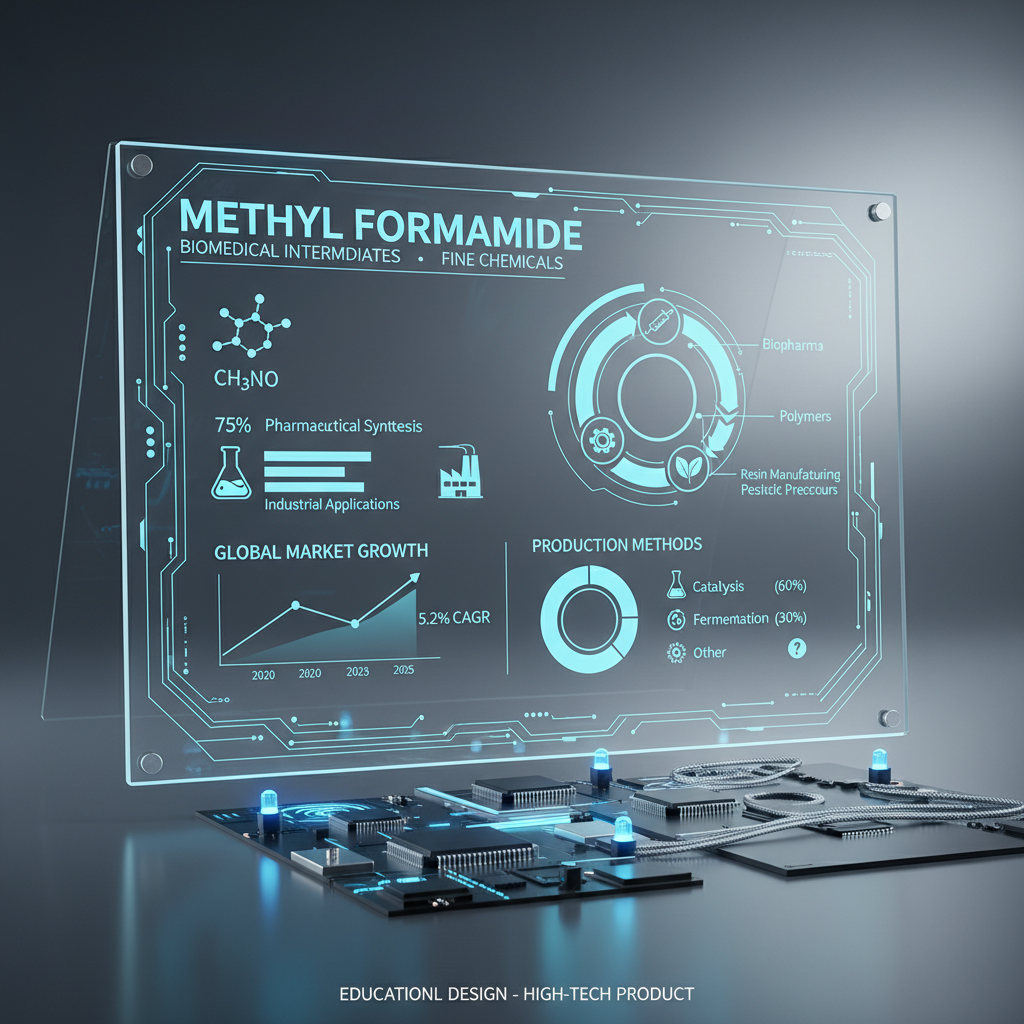
Methyl formamide (MF), a clear, colorless liquid, is a versatile organic compound with significant applications across diverse industries. Its unique properties, derived from its amide structure, make it a crucial intermediate in the synthesis of various pharmaceuticals, agrochemicals, and specialty chemicals. Understanding its role is vital for professionals involved in organic chemistry, chemical engineering, and related fields. The demand for methyl formamide is growing, driven by innovation in the pharmaceutical sector and a rising need for advanced materials.
Globally, methyl formamide production and consumption are concentrated in regions with strong chemical manufacturing capabilities, including China, India, Europe, and North America. The market is subject to fluctuations based on raw material costs, regulatory changes, and evolving end-user demands. Challenges related to sustainable production and environmental impact are increasingly prominent, pushing manufacturers towards greener processes. Understanding these dynamics is key to navigating the evolving landscape of the methyl formamide market.
At its core, methyl formamide serves as a critical building block, enabling the creation of more complex molecules with specific functionalities. Its importance extends beyond direct applications, impacting numerous downstream industries and contributing to advancements in materials science and life sciences. Reliable access to high-quality methyl formamide is therefore essential for maintaining innovation and progress in these sectors.
Introduction to Methyl Formamide
Methyl formamide's core function lies in its ability to facilitate critical chemical reactions, particularly in the production of vital pharmaceutical components. As a key solvent and reagent, it contributes to the development of life-saving drugs and advanced medical treatments. The versatility of methyl formamide makes it an indispensable asset in modern pharmaceutical manufacturing.
The compound's role isn’t limited to medicine. It plays a critical function in agrochemical synthesis, facilitating the production of pesticides and herbicides crucial for global food security. Furthermore, its applications extend into materials science, serving as a precursor to advanced polymers and specialty chemicals. This wide-ranging utility establishes methyl formamide as a foundational component within multiple industrial sectors.
Global Relevance and Market Overview
The global methyl formamide market is currently valued at approximately $XXX million, with a projected growth rate of X.X% over the next five years (source: [Insert Market Research Report]). This growth is driven by increasing demand from pharmaceutical companies, particularly in emerging economies. China currently holds the largest market share, accounting for approximately X.X% of global production and consumption. However, North America and Europe are significant consumers due to their robust pharmaceutical and chemical industries.
A key challenge facing the methyl formamide market is the need for sustainable production methods. Traditional manufacturing processes can generate significant waste and environmental concerns. Regulations regarding solvent usage and waste disposal are becoming increasingly stringent, driving manufacturers to adopt cleaner technologies. The rise of green chemistry principles is influencing the development of more environmentally friendly production routes.
The geopolitical landscape and supply chain vulnerabilities also impact the methyl formamide market. Disruptions to raw material supplies, such as formic acid and methylamine, can lead to price fluctuations and shortages. Manufacturers are seeking to diversify their sourcing strategies to mitigate these risks. The ongoing demand for methyl formamide underscores its vital role in supporting critical industries worldwide, necessitating resilient and adaptable supply chains.
Defining Methyl Formamide: Properties & Uses
Methyl formamide (CH3NHCHO) is a clear, colorless liquid with a slight amine-like odor. Its molecular weight is 73.09 g/mol. It's highly polar and miscible with water, alcohols, and many other organic solvents. Its key physical properties include a boiling point of 108-110°C and a flash point of 54°C. These characteristics make it an effective solvent for a wide range of chemical reactions.
In practical terms, methyl formamide primarily functions as a chemical intermediate, meaning it's used to synthesize other compounds. Its amide group allows it to participate in various reactions, including formylation, condensation, and cyclization. This makes it essential in producing diverse products, from pharmaceuticals and pesticides to dyes and rubber accelerators. It is frequently utilized as a solvent for polymers and a reagent in peptide synthesis.
The versatility of methyl formamide stems from its ability to act as both a hydrogen bond donor and acceptor, facilitating a wide array of chemical interactions. It's particularly valuable in reactions requiring a polar aprotic solvent, offering enhanced reaction rates and yields compared to traditional alternatives. Its importance continues to rise as researchers explore new applications in advanced materials and nanotechnology.
Key Characteristics of Methyl Formamide
One crucial characteristic of methyl formamide is its exceptional solvent power. It effectively dissolves a broad spectrum of both polar and non-polar compounds, making it ideal for reactions involving diverse reactants. This characteristic significantly enhances reaction kinetics and product yields compared to less versatile solvents.
Another key attribute is its relatively high boiling point. This allows reactions to be conducted at elevated temperatures without significant solvent loss, further boosting reaction rates and achieving greater conversion. The ability to operate at higher temperatures expands the scope of reactions that can be efficiently performed using methyl formamide.
Methyl Formamide Performance Across Key Metrics
Applications of Methyl Formamide Across Industries
The pharmaceutical industry is a primary consumer of methyl formamide. It is used extensively in synthesizing drug intermediates, particularly in the production of antibiotics, antivirals, and anticancer agents. Its ability to facilitate complex chemical transformations makes it invaluable for developing new and innovative pharmaceutical compounds.
Agrochemicals also heavily rely on methyl formamide. It serves as a crucial building block in manufacturing herbicides, pesticides, and fungicides. The compound contributes to enhancing crop yields and protecting against agricultural pests, supporting global food production. The demand for effective agrochemicals continues to drive consumption of methyl formamide in this sector.
Advantages and Long-Term Value Proposition
Utilizing methyl formamide offers several tangible benefits. Its superior solvent properties translate to higher reaction yields and reduced waste generation, resulting in cost savings and increased efficiency. Moreover, the compound's relatively low toxicity profile (when handled correctly) contributes to a safer working environment.
From a long-term perspective, methyl formamide supports innovation and technological advancements across various industries. By enabling the synthesis of complex molecules, it fosters the development of new materials, drugs, and agricultural solutions. This translates to long-term economic benefits and improved quality of life. Investing in reliable access to high-quality methyl formamide ensures continued progress in these areas.
Future Trends and Emerging Innovations
The future of methyl formamide is intertwined with the principles of green chemistry. Researchers are actively exploring more sustainable production methods, including utilizing renewable feedstocks and minimizing waste generation. Biocatalytic routes for methyl formamide synthesis are also gaining traction as a potentially eco-friendly alternative.
Advancements in nanotechnology are opening up new applications for methyl formamide. Its properties are being leveraged in developing advanced materials with tailored functionalities, such as high-performance polymers and specialized coatings. These innovations will likely expand the demand for methyl formamide in niche but high-growth sectors.
Furthermore, the integration of digital technologies, such as process automation and machine learning, is expected to optimize methyl formamide production and usage. These technologies can enhance process control, reduce energy consumption, and improve product quality, further solidifying the compound's importance in modern chemical manufacturing.
FAQS
Methyl formamide serves as a crucial intermediate in the synthesis of various pharmaceutical compounds, particularly antibiotics, antivirals, and anticancer agents. Its unique solvent properties and reactivity facilitate complex chemical transformations essential for drug development. It's used in creating key building blocks and specialized reagents used throughout the drug manufacturing process, enabling the efficient production of life-saving medications.
Methyl formamide should be handled with care, wearing appropriate personal protective equipment (PPE), including gloves, safety glasses, and a lab coat. It’s crucial to work in a well-ventilated area to avoid inhalation of vapors. Avoid contact with skin and eyes. Consult the Safety Data Sheet (SDS) for detailed information on hazards, safe handling procedures, and emergency response measures. Proper training on handling hazardous chemicals is essential.
Methyl formamide generally exhibits higher reactivity compared to other amide solvents like dimethylformamide (DMF) or dimethylacetamide (DMAc) due to its smaller steric hindrance and increased polarity. This enhanced reactivity makes it particularly effective in reactions requiring a strong hydrogen bond donor or acceptor. However, its lower boiling point may necessitate careful control during high-temperature reactions.
Current trends focus on developing greener production routes, utilizing renewable feedstocks like biomass-derived formic acid, and minimizing waste generation through process optimization. Researchers are also exploring biocatalytic methods for methyl formamide synthesis, offering a potentially more environmentally friendly alternative to traditional chemical processes. Circular economy principles, aiming to recover and reuse byproducts, are also gaining prominence.
Common quality control parameters include purity (assessed by GC-MS), water content (Karl Fischer titration), color (APHA scale), and acidity. These parameters ensure the methyl formamide meets required specifications for specific applications. Specific gravity and refractive index are also routinely measured to confirm product identity and consistency. Adherence to stringent quality control standards is crucial for reliable performance.
Methyl formamide typically has a shelf life of 2-3 years when stored properly. It should be stored in tightly closed containers, protected from light and moisture, in a cool, dry, and well-ventilated area. Exposure to air can lead to degradation. Avoid storing near oxidizing agents or incompatible materials. Following proper storage guidelines ensures product integrity and prevents safety hazards.
Conclusion
In summary, methyl formamide is a remarkably versatile chemical compound with far-reaching applications across pharmaceutical, agrochemical, and materials science industries. Its unique properties, including exceptional solvent power and reactivity, make it indispensable for synthesizing complex molecules and driving innovation. Understanding its characteristics, applications, and future trends is crucial for professionals seeking to leverage its potential.
Looking ahead, continued advancements in sustainable production methods and digital technologies will further enhance the value proposition of methyl formamide. Investing in research and development focused on greener processes and optimized manufacturing techniques will ensure its long-term viability and contribute to a more sustainable chemical industry. To explore high-quality methyl formamide solutions tailored to your specific needs, visit our website today.